Moms Across America®®
Data Center Action — Moms Across America

Data Centers

Arming you with the facts and resources you need to defend your water, land, air, health, energy systems, local budgets, and right to self-governance.

ShareFacebookX

Take Action

Active Data Center Petitions

Add your name first. These three are live now.

1 of 3

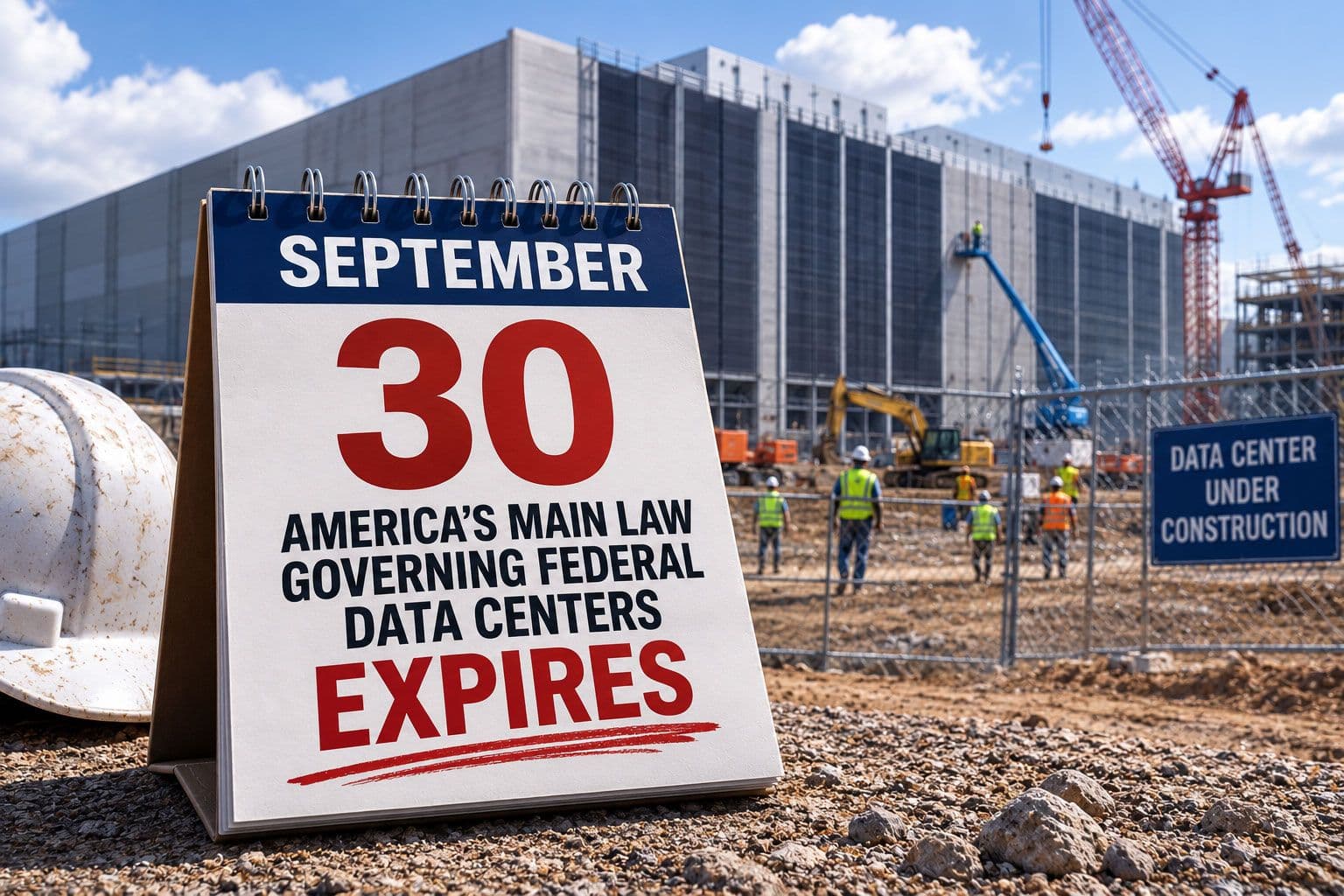
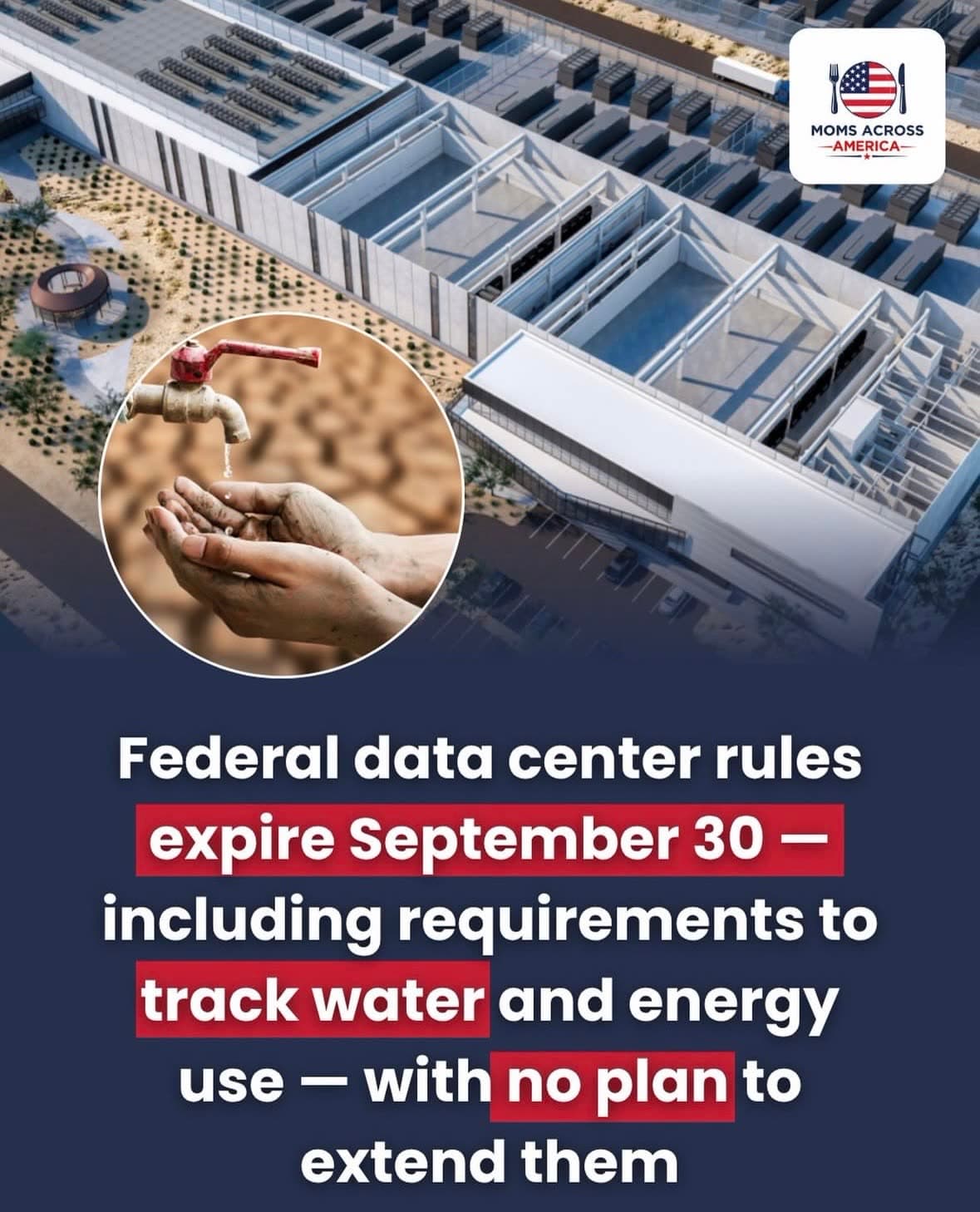
Extend the FDCEA Before September 30

On September 30, America’s main law governing federal data centers is set to expire, with no clear replacement or extension in sight. The timing is difficult to ignore, as the United States is being pushed, largely by executive order, through what may be its largest infrastructure buildout since the construction of the railroad system.

Send Letter

2 of 3

Voices From Data Center Communities

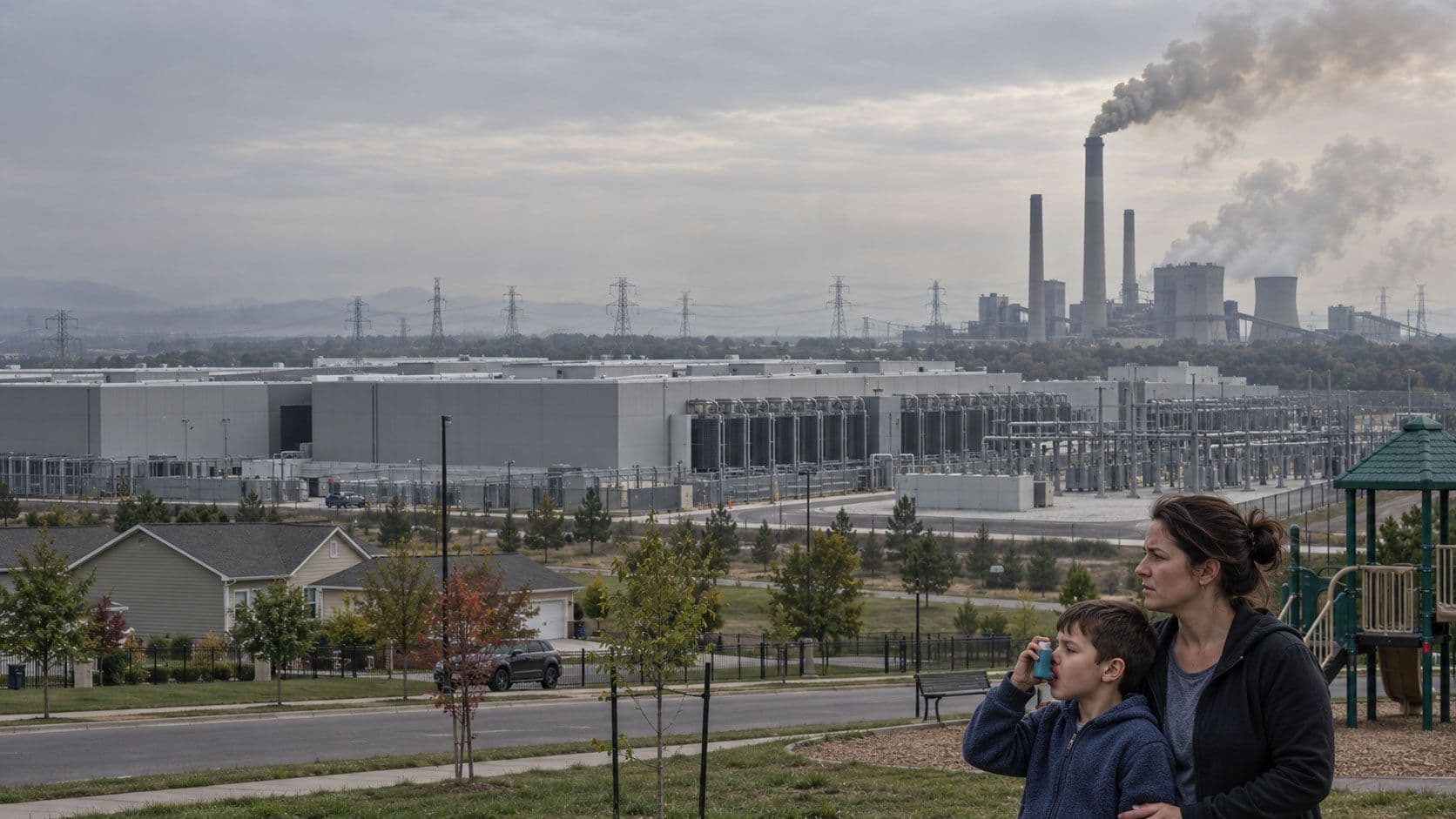
We are sharing this letter in response to President Trump’s recent comments describing towns that welcome data centers as “smart communities” and telling Americans, “You can’t fight it. You have to go with it.” Meanwhile, communities across the country are experiencing pressure on local water and energy supplies, industrial noise, pollution, loss of farmland and open space, and rising utility costs. We deserve the opportunity to show our nation’s leaders what is happening beyond promises of economic growth. Please add your name to support Americans living on the front lines of rapid data center development.

Send Letter

3 of 3

President Trump, Please Put America’s Health First in the AI Boom

Please add your name to the letter below to urge President Trump to ensure that America’s AI buildout defends our children, farmers, land, and water. New data centers should not be powered by expanded coal use, which causes serious health issues.

Send Letter

Have you organized a moratorium or campaign in your community? Share what worked so we can turn it into a playbook other families can follow.

I can help with research →

The Data Center Down Low

Latest Data Center News

A weekly digest of the news, science, and community actions shaping the data center fight across America. Newest edition is open first — expand past weeks to catch up.
  • Energy

    Trump Declares National Emergency Over Threats to U.S. Power Grid

    President Trump declared a national emergency over foreign threats to the bulk power system and directed federal agencies to restrict equipment from countries considered security risks. The order specifically cites rapidly growing electricity demand from artificial intelligence and data centers as increasing the consequences of any disruption to the grid.

    Read at White House
  • Energy

    U.S. Gas Power Construction Surges Alongside AI Data Center Development

    The United States is now building approximately twice as much gas-fired power capacity as China, according to an analysis by Global Energy Monitor. Roughly half of the proposed U.S. capacity is reportedly connected to data-center demand, raising concerns about emissions, utility costs and the long-term expansion of fossil-fuel infrastructure.

    Read at The Guardian
  • Policy

    Arizona Attorney General Calls for Statewide Data Center Pause

    Arizona Attorney General Kris Mayes called for a statewide pause on new data-center approvals and construction until the state develops a plan for managing the industry’s growth. She cited rising electricity bills and a nearly 30% reduction in Arizona’s Colorado River allocation, arguing that the state is already constrained by both power and water.

    Read at Arizona Attorney General’s Office
  • Policy

    Pennsylvania imposes sweeping new restrictions

    Governor Josh Shapiro removed data centers from Pennsylvania’s Fast Track permitting program and prohibited state agencies from signing NDAs with developers. Projects must now obtain local approval and commit to the state’s grid requirements before state environmental review proceeds.

    Read at Commonwealth of Pennsylvania
  • Policy

    Three new data-center moratoriums take effect

    Indianapolis paused new data centers through December 2027. Calvert County, Maryland, and Anderson County, South Carolina, each approved six-month moratoriums while officials examine potential effects on electricity, water and infrastructure.

    Read at wfyi
  • Policy

    Texas data center review continues through at least December

    ERCOT expects to complete Governor Abbott’s audit by December 10th. Roughly 300 proposed projects of at least 75 megawatts are undergoing verification, while 17 advanced projects representing 6.6 gigawatts are still waiting for final approval to energize.

    Read at Utility Dive
  • Policy

    Data Centers Emerge as a Major Midterm Issue

    Data Centers Emerge as a Major Midterm Issue Data centers are influencing gubernatorial races as candidates respond to concerns about electricity prices, water consumption and local control. Governors in several states are reconsidering tax breaks and adopting stricter development rules.

    Read at AP
  • Energy

    Short-Term Energy Outlook

    U.S. Electricity Demand Expected to Set New Records The Energy Information Administration expects national electricity consumption to reach record levels in 2026 and again in 2027. Growth is being driven largely by AI data centers and other large computing facilities.

    Read at U.S. Energy Information Administration
  • Policy

    U.S. Lawmaker Proposes a Data Center Bill of Rights

    Rep. Khanna Introduces Data Center Bill of Rights. Rep. Ro Khanna (D-CA) introduced a resolution proposing 2,500-foot buffers, public impact reports and a community right to reject data centers. It is currently a nonbinding resolution, not an enforceable law.

    Read at TechRadar
  • AI

    Approved Decision of Townsite Data Center

    The Bureau of Land Management approved the 88.5-acre Townsite Data Center near Boulder City, Nevada, in June, in what is believed to be the first commercial AI data center approved on BLM-managed public land. The developer replaced a previously approved solar and battery project with the data center proposal, prompting appeals over the lack of a new environmental review and public-comment period.

    Read at Bureau of Land Management
  • Policy

    Army Reaches Conditional Agreement for Hyperscaled Data Centers

    The Pentagon has opened or considered land at at least a dozen Army and Air Force installations for commercial AI data centers, although only two projects have been conditionally selected so far: Carlyle at Fort Bliss, Texas, and CyrusOne at Dugway Proving Ground, Utah. The agreements remain under negotiation, and the companies would finance, operate and eventually decommission the facilities.

    Read at U.S. Army
  • Energy

    Federal Government to Turn a Kentucky Uranium Plant Into an AI Data Center and Gas Power Complex

    The Department of Energy is planning a $100 billion data center and energy complex at the former Paducah Gaseous Diffusion Plant in Kentucky, including a 1.8-gigawatt campus and 2 gigawatts of gas generation. Cleanup of the contaminated Cold War site, including groundwater contamination, is projected to continue through 2065 and cost about $17 billion, prompting public-health and environmental groups to raise concerns about cumulative pollution and regulatory oversight.

    Read at AP
  • AI

    Open Weights and American AI Leadership

    Dozens of tech companies, including NVIDIA, Microsoft, Meta and Palantir, signed a July 24 letter urging U.S. policymakers to avoid premature restrictions on open-weight AI models, arguing that openness is essential to competition, security and American leadership in AI.

    Read at NVIDIA
  • Health

    Frontiers | The energy challenges of artificial superintelligence

    A 2023 peer-reviewed paper estimated that fully simulating the human brain with conventional supercomputers could require around 2.7 billion watts of power, compared with just 12 watts used by the brain itself.

    Read at Frontiers.org
  • AI

    President Trump Makes an Announcement on the Ratepayer Protection Pledge – The White House

    Speaking at the EPA on July 23, President Trump urged governors and other leaders to convince their communities to embrace AI data centers, declaring, “You can’t fight it. You have to go with it.” He also renewed his emphasis on the administration’s voluntary Ratepayer Protection Pledge.

    Read at Whitehouse.gov
  • Policy

    Minor New Source Review Program Air Permitting Public Participation Requirements for State Implementation Plans

    The EPA has proposed eliminating minimum federal public participation requirements for “minor source” air permits and leaving those decisions to state and local regulators. If finalized, the change could remove guaranteed public notice and comment for some data-center backup generators,coal ash, gas turbines, and other equipment classified as minor pollution sources. A virtual hearing is scheduled for July 22, and comments are open through August 21.

    Read at Federal Register
  • Policy

    Sign our Petition to Trump

    Please sign and share this petition urging President Trump to reject expanded coal use as the answer to data center demand and require transparency, local review, and strong safeguards for children, farmers, health, land, and water.

    Read at Moms Across America
  • Energy

    Big Tech Is Now Targeting Native American Land for Massive Data Centers - The New York Times

    A New York Times investigation found technology and energy companies pursuing data-center projects on tribal lands, where sovereign authority may allow faster approvals than conventional permitting processes. Some tribal leaders view the projects as an economic opportunity, while others warn that secrecy, water risks, and promises of prosperity resemble earlier patterns of exploitation. The Seminole Nation of Oklahoma has already enacted a moratorium on data-center development.

    Read at NY Times
  • How big will the Richland Parish data center be? Meta will expand AI center

    Meta’s Richland Parish data center project in Louisiana has now reportedly expanded to more than $50 billion and five gigawatts of computing capacity, nearly doubling its original estimated cost.

    Read at Shreveport Times
  • Energy

    Evaluating Grid Resilience in the Era of Ever-Increasing Data Centers

    A July 8 preprint found that doubling a simulated data center’s power demand increased electricity shortages during a grid emergency more than sevenfold. Concentrating demand during the most strained period increased the shortage by another 34%.

    Read at arXiv
  • Policy

    White House to rally utilities, data centers for AI power cost pledge, sources say

    The White House plans to recruit more utilities, data center operators, and governors for its Ratepayer Protection Pledge. The voluntary pledge asks companies to cover data center-related power plant and grid costs rather than passing them to customers.

    Read at Reuters
  • Energy

    Heat dome poses woes for largest US power grid beyond data center boom

    Wholesale power costs in the PJM region rose 68% during the first five months of 2026 as data center demand and extreme summer heat placed additional strain on the grid. PJM also reported record-high electricity demand during the recent heat dome.

    Read at Reuters
  • ComEd says power grid under "critical strain" on West Side, in some west, southwest suburbs amid heat wave

    ComEd asked customers in parts of Chicago and its western suburbs to immediately reduce electricity use after the heat wave pushed portions of the grid to a “critical level.” Customers were urged to raise thermostats, close blinds, and unplug unused electronics.

    Read at CBS Chicago
  • Energy

    AI data centres are driving up power bills at America’s Rust Belt factories

    Ohio-based Belden Brick saw its monthly electricity capacity costs rise from approximately $1,600 to more than $12,000. The increase comes as PJM capacity prices have climbed from $28.92 per megawatt-day in 2024 to $329.17, a rise of more than 1,000%.

    Read at The Next Web
  • Policy

    UN chief calls on AI firms to come clean on their environmental costs

    At London Climate Action Week, UN Secretary-General António Guterres called on AI companies to publicly disclose their data centers' water, carbon, and land-use impacts, warning about the rapidly increasing power and water needs of data centers. His best quote: “If AI is to help build a better future, it must be honest about what it costs us now.”

    Read at Reuters
  • Policy

    40 mayors back a new Global Urban Data Centres Pact

    Mayors from 40 major cities, including London, Phoenix, Melbourne, Barcelona, Chennai, and Boise, backed a new Global Urban Data Centres Pact to curb the pressure data centers put on power grids, water supplies, and communities.

    Read at AP
  • Energy

    Texas approves new ERCOT process as data-center grid backlog explodes

    Texas approved a new ERCOT (Electric Reliability Council of Texas) process to connect data centers to the grid, citing a massive backlog of more than 438,000 megawatts of large-load requests in queue — 90% of them for data centers. The new process “batches” applications together, which they say will resolve the backlog and organize better studies. Meanwhile, they project that electricity demand in Texas will quadruple by 2032.

    Read at Austin American-Statesman

One Sheet, Every Angle

Health & Community Impacts

How data centers affect the health, water, land, energy, and living things of the communities around them — researched by the Moms Across America research team. Choose a topic to explore the key facts, questions to ask your officials, and real community examples.

Water Use

Download PDF

Research by Jade Valent

70–90%of the water withdrawn by evaporative-cooled data centers is lost to evaporation — compared with about 5–15% for residential users

Data centers can place serious pressure on local water supplies, especially in drought-prone or water-stressed regions. These massive industrial facilities are being approved at great scale without transparency, enforceable limits, or proof that local drinking water, wells, farms, and ecosystems will be protected.

Key Facts

  • U.S. data centers directly consumed about 17.4 billion gallons of water in 2023 — roughly 48 million gallons per day. Operating data centers produces enormous amounts of heat, requiring large volumes of water for cooling, equipment protection, and fire suppression. Many facilities also use potable drinking water for cooling instead of treated wastewater or other lower-impact sources, which are often more costly to implement. Lawrence Berkeley National Laboratorynpj Clean Water
  • Much of the water used for data center cooling is lost through evaporation instead of returning to the local water system. Evaporative cooling, one of the most common cooling methods used by large modern data centers, is energy-efficient but directly consumes water, often from municipal supplies. A 2026 study on data center impacts to public water systems found that data centers can evaporate roughly 70–90% of withdrawn water, compared with about 5–15% for residential users. As AI data centers expand, evaporation-based cooling is expected to remain a major concern, especially during periods of extreme heat. 2026 study
  • Most data center water use may happen beyond the facility itself. According to the International Energy Agency, an average 100 MW hyperscale data center in the United States consumes about 2 million liters of water per day in total, with more than 60% coming from indirect water use. This includes water tied to the energy supply and semiconductor manufacturing needed to keep data centers operating. International Energy Agency
  • Water use reporting remains deeply inconsistent across the data center industry. Uptime Institute's 2021 Global Data Center Survey found that only 51% of respondents measured water use in some way, and that this was done mainly at the individual site level instead of across an entire portfolio of facilities. Uptime Institute
  • The water burden is local, even when the technology is used globally. People around the world may rely on the services powered by a data center, but the water withdrawals, evaporation, and watershed impacts are concentrated in the community where the facility is built. The Lincoln Institute of Land Policy explains that even when data centers use reclaimed or recycled water, that water may no longer return to the rivers and streams local communities depend on. Lincoln Institute of Land Policy
  • Data center siting often forces a trade-off between water use and electricity use. Lawrence Berkeley National Laboratory explains that water-cooled and evaporation-based cooling systems are generally more energy-efficient, while air-cooled or waterless systems use little to no onsite water but require more electricity. In other words, a data center can often reduce water use by using more power, or reduce power use by consuming more water. Lawrence Berkeley National Laboratory

Cautionary Example

Mesa, Arizona

Mesa shows what can happen when major data center growth moves into an already water-stressed region. Meta, Google, and Microsoft all have data center projects in Maricopa County, while Arizona has already revoked permits for new homes in the area because of groundwater shortages. Google's Mesa data center was permitted to use 5.5 million cubic meters of water per year — equal to the water use of about 23,000 residents. This raises a serious question for dry communities: if there is not enough groundwater for new homes, why are large data centers still being approved?

The Wall Street Journal

Community Win

South Carolina groundwater limits

The Southern Environmental Law Center pushed back in South Carolina after Google planned to use more than 500 million gallons of water per year in an already water-stressed county. As a result, Google agreed to limit groundwater withdrawals. The company can now withdraw groundwater only as a last resort, when other water supplies are exhausted or when maintenance is needed on its well. Google must also develop alternative water sources and publicly report groundwater use every quarter instead of only once a year.

Southern Environmental Law Center

Questions to ask your local officials(9)
  • ?Has the community been given an independent water impact study before approval?
  • ?How much water will this project use each day and each year at full buildout?
  • ?Will the facility use potable drinking water, groundwater, surface water, recycled wastewater, stormwater, or another source?
  • ?Will the project use evaporative cooling, air cooling, liquid cooling, or another cooling method?
  • ?How much water will be evaporated and permanently lost from the local watershed?
  • ?Will water use increase during heat waves or drought conditions?
  • ?Could the project lower private wells, reduce streamflow, or affect nearby farms, wetlands, rivers, or aquatic ecosystems?
  • ?Will the developer be required to publicly report water use monthly or quarterly?
  • ?What happens if drought restrictions are declared? Will residents, farmers, or the data center be cut back first?

Recommended Call to Action

Demand a local pause or moratorium on data center approvals until enforceable water protections require developers to disclose total water demand, use non-potable or recycled water whenever possible, publicly report water use, and prove the project will not threaten drinking water, private wells, agriculture, or local ecosystems.

This section is being expanded. Have a study, news report, or firsthand account on water use? Email links and information to info@momsacrossamerica.org and help build this resource.

From the News Desk

Data Center Blogs

Articles from Moms Across America on data centers, AI buildout, and what communities are doing about it.
View all articles →

Print & Organize

Tool Kit

Printable fact sheets live in the strip below, with community action tools and policy research after that.

Master List of Questions for Local Officials

Bring these to your next city council or county commission meeting. Compiled by the Moms Across America research team and organized by impact area.

Water Use(9)
  • ?Has the community been given an independent water impact study before approval?
  • ?How much water will this project use each day and each year at full buildout?
  • ?Will the facility use potable drinking water, groundwater, surface water, recycled wastewater, stormwater, or another source?
  • ?Will the project use evaporative cooling, air cooling, liquid cooling, or another cooling method?
  • ?How much water will be evaporated and permanently lost from the local watershed?
  • ?Will water use increase during heat waves or drought conditions?
  • ?Could the project lower private wells, reduce streamflow, or affect nearby farms, wetlands, rivers, or aquatic ecosystems?
  • ?Will the developer be required to publicly report water use monthly or quarterly?
  • ?What happens if drought restrictions are declared? Will residents, farmers, or the data center be cut back first?
Water Quality & Contamination(6)
  • ?What chemicals will be used onsite, and will the full chemical list be public before approval?
  • ?Where will wastewater go, and has the receiving treatment plant confirmed it can safely handle the volume, heat, and chemicals?
  • ?Will nearby wells, groundwater, surface water, and discharge points be tested before construction begins?
  • ?What permits are required for wastewater, stormwater, and construction runoff, and will they include public reporting?
  • ?Who has authority to stop the discharge immediately if contamination, treatment problems, or violations occur?
  • ?Who pays for testing, treatment upgrades, emergency response, cleanup, and long-term monitoring if something goes wrong?
Land Use & Farm Impacts(3)
  • ?What is the environmental impact assessment and how will this be monitored and enforced?
  • ?Who pays for the increasing costs of utilities?
  • ?How can we protect farms and farmers and ensure these data centers are on less desirable land, away from communities and ranchers, reducing harm to the environment and children's health?
Environmental & Ecological Impacts(3)
  • ?How can you guarantee data center companies will comply with the resolution agreements or MOUs (Memorandum of Understanding) to follow strict safety measures?
  • ?How will you ensure that the noise and light pollution will be contained?
  • ?Are you aware of how the data centers affect the wildlife and the rest of the environment locally?
Human Health Impacts(5)
  • ?Will an independent health impact assessment be completed before this project is approved?
  • ?Will the assessment examine cumulative exposure to air pollution, noise, water withdrawals, wastewater, construction dust, traffic, and contaminated land?
  • ?What baseline testing will be completed for local air quality, drinking water, private wells, groundwater, and noise before construction begins?
  • ?Will all permits, monitoring results, health assessments, violations, and emergency response plans be made publicly available?
  • ?Who will pay for independent testing, long-term health monitoring, and remediation if residents' health or local water supplies are harmed?
Heat Impacts(4)
  • ?What environmental impact assessment has been done?
  • ?What will be done to mitigate the effects of the heat produced by the facility?
  • ?Can the facility be better insulated?
  • ?Can legislation be written to prevent data centers from being built in residential areas?
Noise & Low Frequency Vibrations(4)
  • ?What zoning ordinances are establishing maximum noise and low frequency vibration levels for both new and existing data centers?
  • ?What civil penalties will be given for failure to comply with noise restriction ordinances?
  • ?What health monitoring is being done to ensure that the noise pollution from data centers is not harming the local population?
  • ?What vibration meter recordings and sound modeling studies are being made pre and post data center construction to monitor the low frequency and infrasound levels?
Air Pollution(4)
  • ?Do energy reporting practices extend to include assessments for air pollutants and associated public health impacts?
  • ?Are technology companies evaluating the cross-state public health burdens of their operations when deciding where to build data centers and how to source electricity?
  • ?What ongoing research is being conducted to better capture cross-state and downwind impacts of air pollution to improve the data of morbidity and mortality from the data centers?
  • ?What environmental mitigation strategies are in place for the air pollution threats posed to local wildlife and livestock from data centers?
Energy Demand & Utility Rates(6)
  • ?How many megawatts will this project require at full buildout?
  • ?Will it require a new substation, transmission line, transformer bank, feeder upgrade, or power plant? Who pays for those upgrades?
  • ?Can any of those costs be passed on to residents or small businesses through utility rates?
  • ?Is the developer receiving a special electric rate, tax break, subsidy, or discounted energy agreement?
  • ?Has the utility completed an independent large-load study?
  • ?Will energy use, grid impacts, emergency events, and cost allocation be publicly reported?
Subsidies & Tax Abatements(6)
  • ?What tax breaks, abatements, exemptions, grants, discounted utility rates, or other public benefits is this data center requesting?
  • ?Has an independent cost-benefit analysis been completed showing that the public will receive more than it gives up?
  • ?How much public revenue will be waived over the full life of the deal, and which budgets could lose money, including schools, emergency services, roads, or local government services?
  • ?How many permanent local jobs are guaranteed, what will they pay, and what is the public subsidy cost per job?
  • ?Will the company be required to publicly report its energy use, water use, tax savings, job creation, and compliance with the agreement every year?
  • ?Are there clawbacks, caps, expiration dates, or penalties if the company fails to deliver the promised jobs, investment, or community benefits?
Infrastructure Burden & Grid Strain(5)
  • ?What new infrastructure will this project require?
  • ?Who pays for every required infrastructure upgrade: the developer, the utility, the municipality, taxpayers, or ratepayers?
  • ?Could this project affect grid reliability, power outages, emergency response, or service quality for nearby homes and businesses?
  • ?Has an independent infrastructure-impact study been completed and made public before approval?
  • ?If the project is delayed, downsized, canceled, or sold, who is responsible for any stranded infrastructure costs?

This page is a work in progress

This page will continue to be updated as our team gathers more research, resources, community stories, and action steps. Please check back often for new information, updated materials, and additional tools for communities facing data center development.

You can contribute to the data on this page by emailing links and information to info@momsacrossamerica.org.

Email info@momsacrossamerica.org

Translate this page